


Content created by Gourmet Marketing, a full-service hotel marketing agency focused on driving hotel growth and direct bookings with marketing strategies designed for today’s competitive landscape.
2026 Hotel Trends: The Future of Personalized, Authentic, and Tech-Driven Travel
The hospitality world isn’t slowing down anytime soon, and 2026 is already shaping up to be a transformative year for hotels and travelers alike. At Gourmet Marketing, we’ve seen how quickly guest expectations evolve. Travelers today aren’t just booking rooms; they’re seeking moments that feel personal, meaningful, and rooted in place.
From smarter tech and wellness-driven design to creative local partnerships, hotels are reimagining what it means to deliver hospitality. Here are the top eight trends we believe will define how your guests travel, and how your hotel can stay ahead in 2026.
Rachel B., VP of Independent Hotels, notes, “Travelers increasingly want experiences that feel tailored to them, from the room they choose to the local stories they encounter. Hotels that combine authentic touches with thoughtful use of technology will be the ones guests remember and return to.”
1. The Era of Hyper-Personalization
Personalized experiences are no longer optional. Guests expect hotels to remember their preferences and anticipate their needs (Course Advisor). In 2026, AI and data-driven strategies will allow hotels to create truly tailored experiences.
Hotels can now track everything from pillow type and room temperature to dining choices and music preferences. Predictive services will suggest add-ons and packages based on previous bookings and behavior. This level of personalization helps guests feel understood and encourages loyalty.
2. Wellness-Focused Hospitality
Wellness is much more than spa treatments and gym access these days. Hotels are focusing on holistic experiences that support both mental and physical health.
Sleep is a big part of this trend, with specialized suites offering circadian lighting, soundscapes, and technology to help guests rest better. Glow-cations are emerging, providing skin treatments, smart mirrors, and hydration stations that respond to personal needs (HospitalityNet). Another growing trend is hushpitality (HospitalityNet), which focuses on quiet retreats and soundproofed rooms that allow guests to disconnect and recharge. Wellness is becoming an essential part of the hotel experience.
3. Sustainability as a Standard
Eco-friendly practices are no longer a bonus. Travelers expect hotels to show a genuine commitment to the environment.
In 2026, hotels will use renewable energy, repurpose waste, and conserve water as standard practices. They will communicate these initiatives clearly and transparently, building trust and avoiding greenwashing. Regenerative tourism is also gaining traction, with properties supporting local ecosystems and sourcing food from nearby suppliers. Guests want to know that their stay leaves a positive impact on the world.
4. Advanced Technology Integration
Technology is making hotel stays smoother and more enjoyable (Deloitte). Hotels are centralizing data across departments to get a complete view of operations and guest preferences.
Mobile-first experiences are becoming standard, with digital keys, app-based service requests, and mobile ordering for food and beverages. AI is also helping with predictive maintenance and staffing, which allows hotel teams to focus on providing better service.
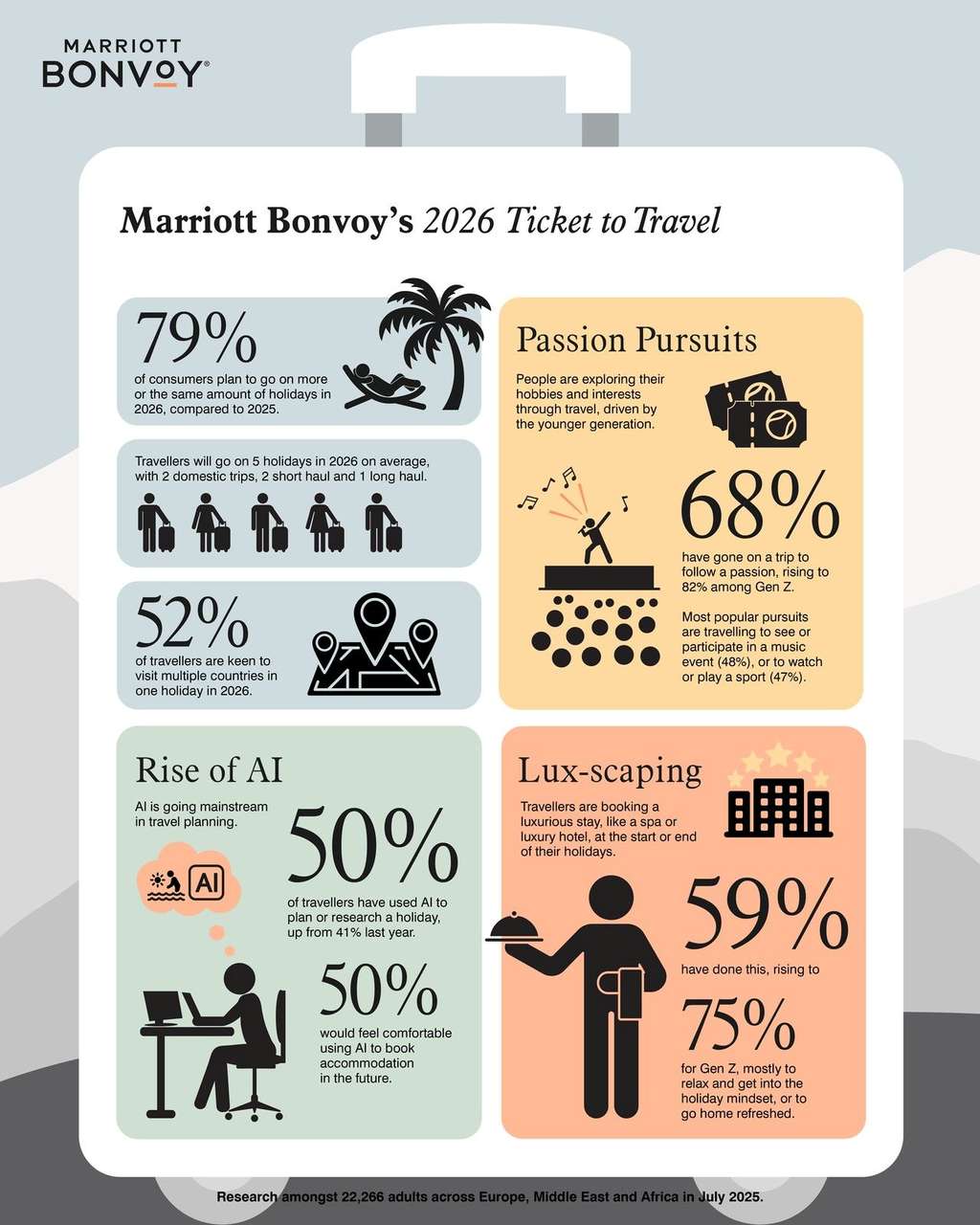
Above: Key findings shaping travel behaviors in 2026, based on Marriott Bonvoy’s large-scale research across EMEA.
5. Authentic, Local Experiences
Travelers want to connect with the local culture wherever they go. Hotels are responding by offering experiences that highlight the community around them.
Partnerships with local chefs, artisans, and businesses allow guests to take part in cooking classes, tours, and art exhibitions (MEWS). Hotel design incorporates local textiles, architecture, and artwork to create a sense of place. Food and beverage offerings are becoming destinations in themselves, with rooftop bars and menus inspired by local flavors. Authentic experiences are what make a stay truly memorable.
6. The Rise of Bleisure and Work-From-Anywhere
Business and leisure travel are merging (Forbes). Guests now need spaces that support work and relaxation at the same time.
Hotels are offering co-working lounges, flexible meeting rooms, and reliable high-speed internet for digital nomads and corporate travelers. Extended stays are on the rise as guests look for accommodations that allow them to balance work and leisure comfortably. Hotels that cater to this trend will appeal to the modern traveler.
7. Modern Milestone Missions
Travel is becoming a way to celebrate personal achievements, not just traditional events like weddings or anniversaries.
Guests are booking trips to mark milestones such as career changes, fitness achievements, or personal growth. The concept of "whycations" is gaining popularity, focusing on purposeful travel and meaningful experiences. Hotels that help guests celebrate these moments create lasting memories and emotionally resonant stays.
8. Alternative Accommodations
Travelers are looking for lodging that is unique and transformative. Futuristic vacation rentals, smart homes with robotic assistants, and high-tech sustainability features are becoming more popular.
Glamping and adventure resorts are also growing, offering outdoor immersion combined with luxury amenities. These alternative accommodations provide travelers with experiences that are both exciting and memorable.
The Future of Hospitality
In 2026, hotels will focus on personalization, technology, wellness, and authenticity. Guests want more than just a room. They want experiences that feel tailored, meaningful, and connected to the world around them. Hotels that embrace these trends will attract modern travelers, build loyalty, and stand out in a competitive market.
By combining AI, sustainable practices, wellness initiatives, and local experiences, hotels in 2026 will create stays that are personal, purposeful, and memorable. The future of hospitality is here, and it is exciting.
FAQs: 2026 Hotel Trends
1. What is the biggest trend shaping the hotel industry in 2026?
The biggest shift is toward intentionality. Hotels are moving away from adding more features and instead focusing on refining the guest experience. It’s less about what’s offered and more about how it feels, easy, intuitive, and genuinely tailored.
2. How important is personalization for hotels today?
Personalization is no longer a differentiator; it’s expected. Guests want their preferences to be remembered without having to repeat them. The focus has shifted to subtle, well-executed personalization that feels natural rather than forced.
3. What does “wellness” mean in hotels in 2026?
Wellness has become more understated. Instead of being a standalone offering like spa packages, it’s now built into the stay itself, through better sleep environments, reduced noise, calming design, and spaces that help guests unwind without effort.
4. How are hotels approaching sustainability differently?
Hotels are moving away from vague sustainability messaging and focusing on visible, practical changes. Guests are looking for clear actions, like reduced plastic use, local sourcing, and transparent operations, rather than broad claims.
5. Is technology still a major focus in hospitality?
Yes, but in a different way. The goal is no longer to showcase technology, but to use it to remove friction. The best tech experiences are the ones guests barely notice, like mobile check-in or seamless service requests.
6. Why are hotels focusing more on local experiences?
Guests are increasingly looking for stays that feel connected to the destination. Hotels are responding by incorporating local design, partnerships, and food experiences that reflect the surrounding culture and community.
7. How is remote work influencing hotel design?
With more guests blending work and travel, hotels are adapting their spaces to support both. This includes flexible work areas, rooms designed for productivity and relaxation, and environments that accommodate longer stays.